

If your Connecticut home has radiators or baseboard heat instead of vents blowing warm air, you likely have a boiler, not a furnace, and boilers fail differently than furnaces do. A boiler in trouble doesn’t always announce itself with a total shutdown. More often it’s a strange noise, a room that never quite warms up, or a water heater bill that keeps climbing for no clear reason. Knowing what to watch for is the difference between a $200 repair this month and an emergency replacement in the middle of a February cold snap.
This guide covers the real warning signs, what typically drives the repair-or-replace decision, and honest cost ranges so you’re not walking into a service call blind.
Furnace or Boiler? A Quick Way to Tell
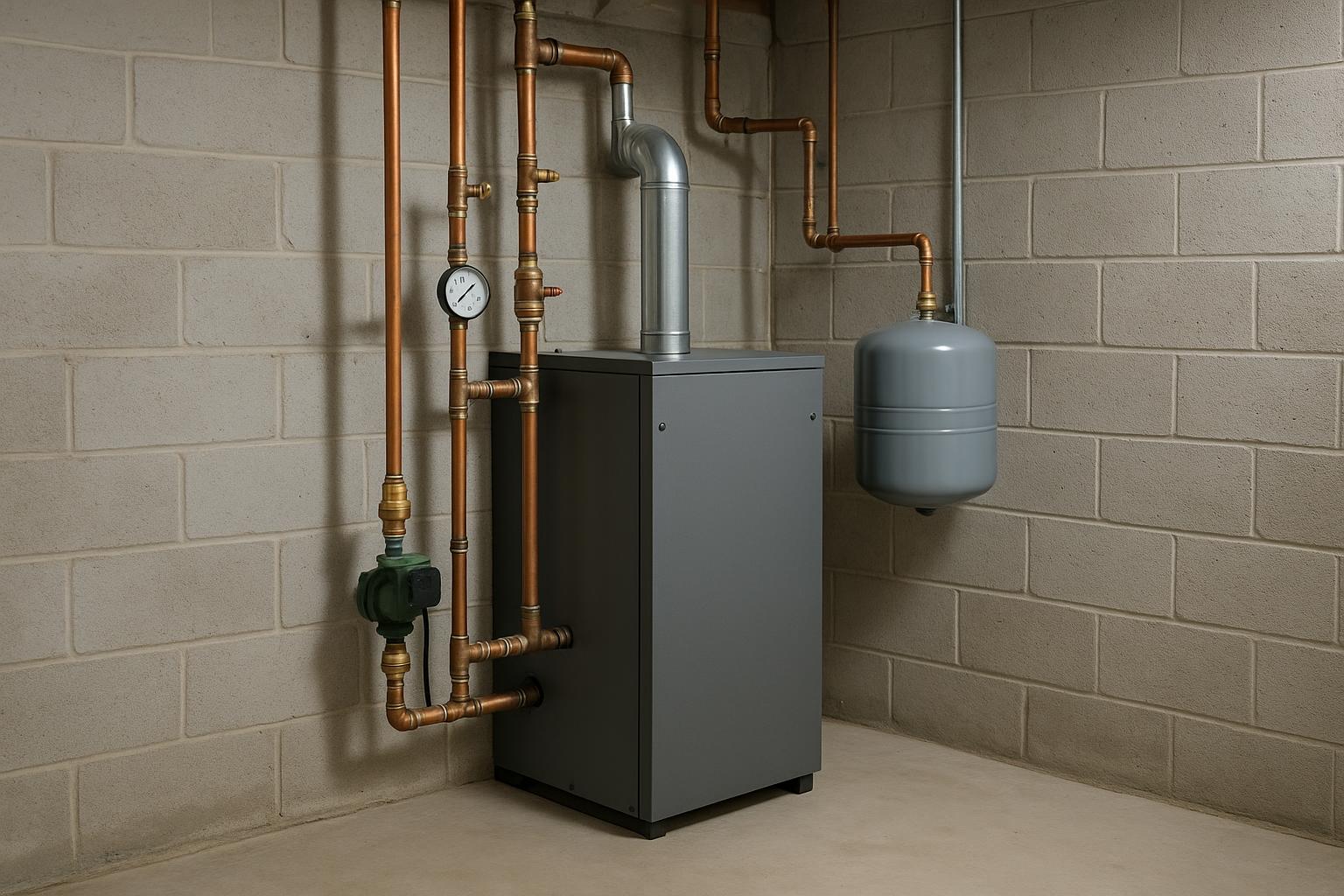
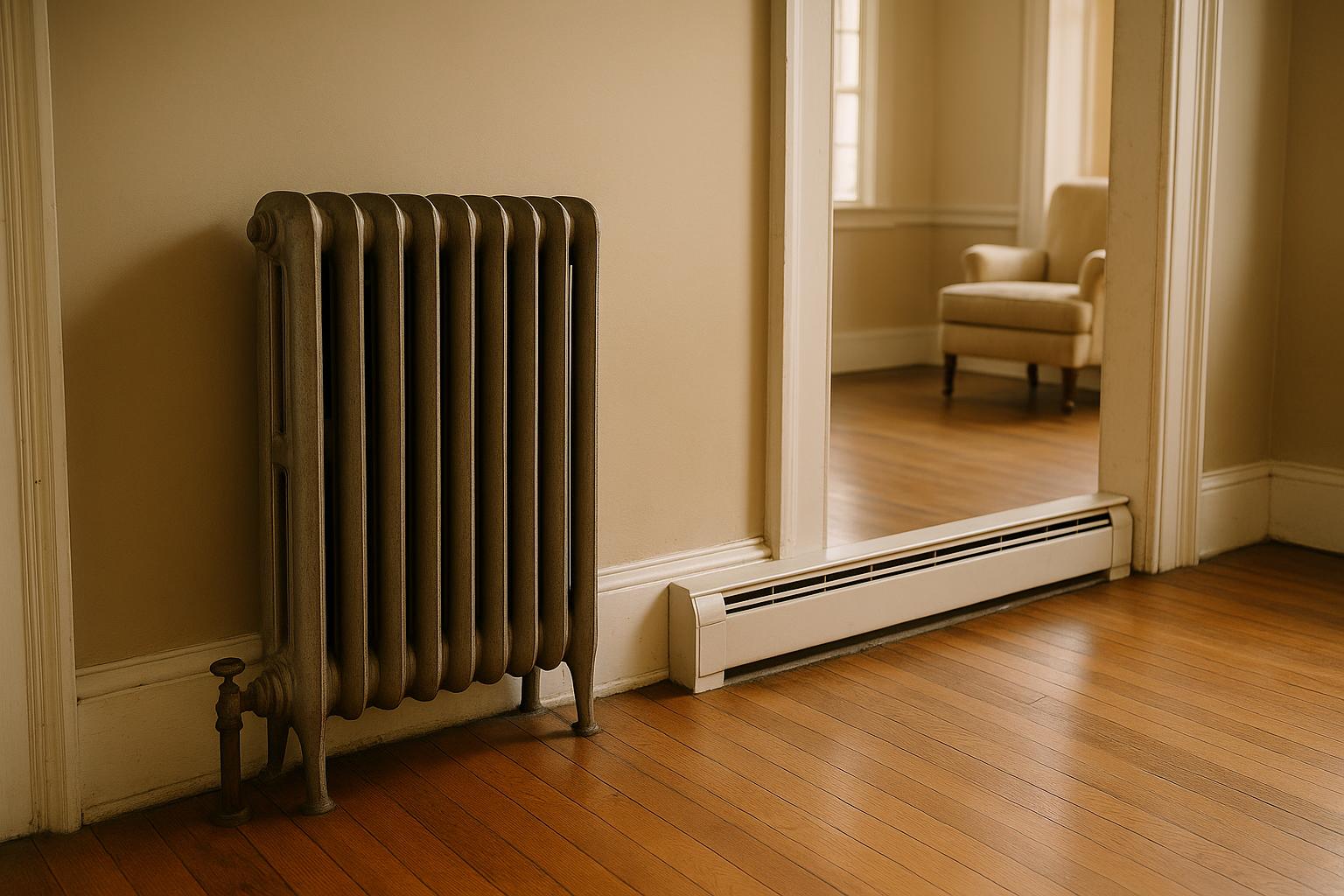
Many Connecticut homeowners genuinely aren’t sure which system they have, especially in older colonials and capes. A few quick signs point to a boiler: heat comes from radiators or baseboard units along the walls rather than vents in the floor or ceiling, there’s no central ductwork running through the house, and the main unit is often connected to visible pipes rather than a large sheet-metal duct system. If you’re still not certain, our furnace repair page covers the furnace-specific signs, worth a quick look if your home doesn’t match the description above.
Warning Signs Your Boiler Needs Repair
Banging, kettling, or gurgling noises. A boiler that’s suddenly loud is usually telling you about mineral buildup (“kettling”) on the heat exchanger, trapped air in the system, or a failing circulator pump. None of these get better on their own.
Uneven heat or cold radiators. If some rooms stay cold while others heat normally, the culprit is often trapped air in the radiators (usually fixable by bleeding them) or a stuck zone valve that needs a technician.
Water pooling around the unit. Any leak around a boiler is worth a same-week call. It can be a failing pressure relief valve, a cracked heat exchanger, or a corroded pipe fitting, and left alone, a small leak becomes a bigger repair fast.
Frequent cycling or trouble staying lit. A boiler that keeps shutting off and restarting, or a pilot light that won’t stay lit, points to a thermocouple, ignition control, or gas valve issue. This is also a safety-relevant sign, not just a comfort one.
Rising heating bills without a clear reason. An aging boiler loses efficiency gradually. If your usage habits haven’t changed but your bills keep climbing, the system is likely working harder than it should to produce the same heat.
Rust or discoloration on the unit or nearby pipes. Visible rust is a sign of a slow leak or internal corrosion, both of which shorten the life of the system if left unaddressed.
The system is 15+ years old and needs repairs more than once a year. Boilers, especially cast-iron models, can run 20 to 30 years with good maintenance. But once a system in this age range starts needing regular repairs, each one is a smaller investment in a system that’s already telling you it’s near the end.
When Repair Isn’t Enough
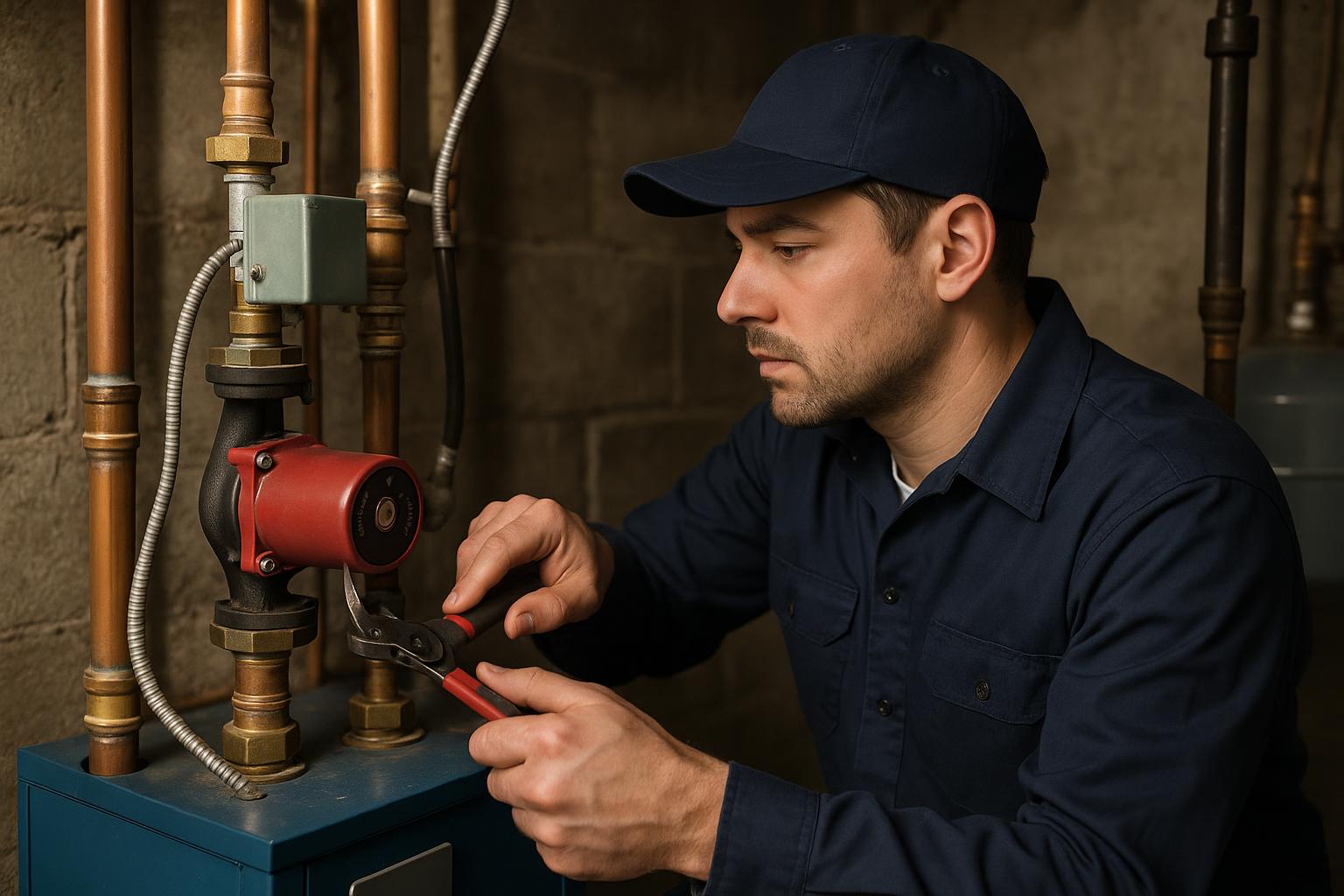
Most boiler problems are legitimate repairs, not automatic replacement triggers. A stuck zone valve, a bad circulator pump, or trapped air are all normal fixes on an otherwise healthy system. Replacement becomes the smarter call in a few specific situations:
- The system is original to a home built before the 1980s and has never been replaced
- A single repair estimate comes in above roughly 50% of what a new boiler would cost
- The heat exchanger itself is cracked or failing (not a peripheral part like a valve or pump)
- The boiler is an older, lower-efficiency model and a modern condensing boiler would meaningfully cut your fuel or electric costs
That last point matters more for boilers than almost any other home heating equipment. Efficiency has improved dramatically. Older cast-iron boilers commonly run in the 60-70% efficiency range, while a modern condensing boiler can hit 90%+ efficiency, meaning less fuel burned for the same amount of heat.
Boiler Repair and Replacement Costs in Connecticut
Every home and system is different, but here’s a realistic range to plan around:
- Common repairs (circulator pump, zone valve, thermocouple, pressure relief valve): typically $150 to $800
- Major component repairs (heat exchanger issues, control board replacement): $800 to $2,000+
- Full boiler replacement: typically $4,000 to $9,000 for a standard-efficiency system, and $8,000 to $14,000+ for a high-efficiency condensing boiler, depending on fuel type, home size, and the complexity of the existing piping
These are planning ranges, not a quote. The only way to get a real number is an in-home assessment, since boiler pricing depends heavily on your specific setup (steam versus hot water, gas versus oil, and how much of the existing piping and venting can be reused). Express offers $0 down financing on boiler replacements, so a failing system doesn’t have to mean an impossible bill all at once.
Protecting Your Boiler With Regular Maintenance
Boilers are mechanically simpler than a lot of modern HVAC equipment, but that doesn’t mean they’re maintenance-free. An annual inspection catches the small issues (a slow leak, a struggling circulator pump, mineral buildup) before they turn into an emergency call during the coldest week of the year. Express’s Comfort Club maintenance plan includes seasonal system checks and priority scheduling, which is especially valuable for a boiler that’s already past the 15-year mark.
Get an Honest Assessment for Your Boiler
If your boiler is making noises it didn’t used to make, leaving rooms cold, or just getting old, the smartest first step is a real inspection, not guessing. Express Home Services is a family-owned, 5.0-star rated HVAC company serving Connecticut, and our technicians are trained on steam and hot-water systems as well as forced-air equipment. We’ll give you an honest answer on whether your boiler needs a repair or a replacement, with a written estimate before any work begins.
Frequently Asked Questions About Boiler Repair in Connecticut
How do I know if I have a boiler or a furnace?
If your home heats through radiators or baseboard units along the walls, rather than vents blowing warm air, you have a boiler. Boilers also don’t run through central ductwork the way furnaces do. Older Connecticut colonials and capes, especially those built before the 1980s, commonly run on boilers.
How much does boiler repair cost in Connecticut?
Common repairs like a circulator pump, zone valve, or thermocouple typically run $150 to $800. Major component repairs, such as heat exchanger issues, can run $800 to $2,000 or more. A technician can give you an exact number after diagnosing the specific problem.
How long do boilers last?
Well-maintained boilers, especially cast-iron models, commonly run 20 to 30 years. Once a boiler in that age range starts needing frequent repairs, replacement usually becomes the more cost-effective option.
Is it worth replacing an old boiler with a new one?
Often, yes. Older cast-iron boilers typically run at 60-70% efficiency, while modern condensing boilers can reach 90%+ efficiency. For a boiler already 15+ years old and needing regular repairs, a replacement can meaningfully lower fuel or electric costs while eliminating the risk of a mid-winter breakdown.
Does Express Home Services offer financing for boiler replacement?
Yes. Express offers $0 down financing with flexible payment plans on boiler replacements, so the upfront cost doesn’t have to be a barrier to fixing a failing system.
Ready to Get Your Boiler Checked?
Express Home Services installs, repairs, and services boilers throughout Connecticut, including steam and hot water systems in older homes. Whether it needs a repair or a full replacement, our team will walk through the honest numbers for your specific home before you spend a dollar.
Call: (860) 606-4872, Monday through Saturday, 7 AM to 7 PM
Schedule online: Book an appointment online
Free estimates on boiler repair, replacement, and new installations.