

If you are weighing a mini split vs central air conditioning for your Connecticut home, the honest starting point is that there is no universally right answer, there is a right answer for your house. The decision comes down to a few concrete factors: whether you already have ductwork, how old your home is, how many rooms or zones you actually need to cool, and how much you value precise, room by room temperature control. This guide walks through how each system actually works, what each one costs installed, and which homes tend to be better served by one over the other.
Connecticut’s housing stock makes this comparison more than academic. A large share of homes in this state, especially older colonials, capes, and converted multi-families, were built around boilers and radiators with no ductwork at all. For those homes, “just install central air” is rarely a simple project. Understanding the real tradeoffs up front saves homeowners from a quote that does not match their actual situation.
How Mini Splits and Central Air Actually Work
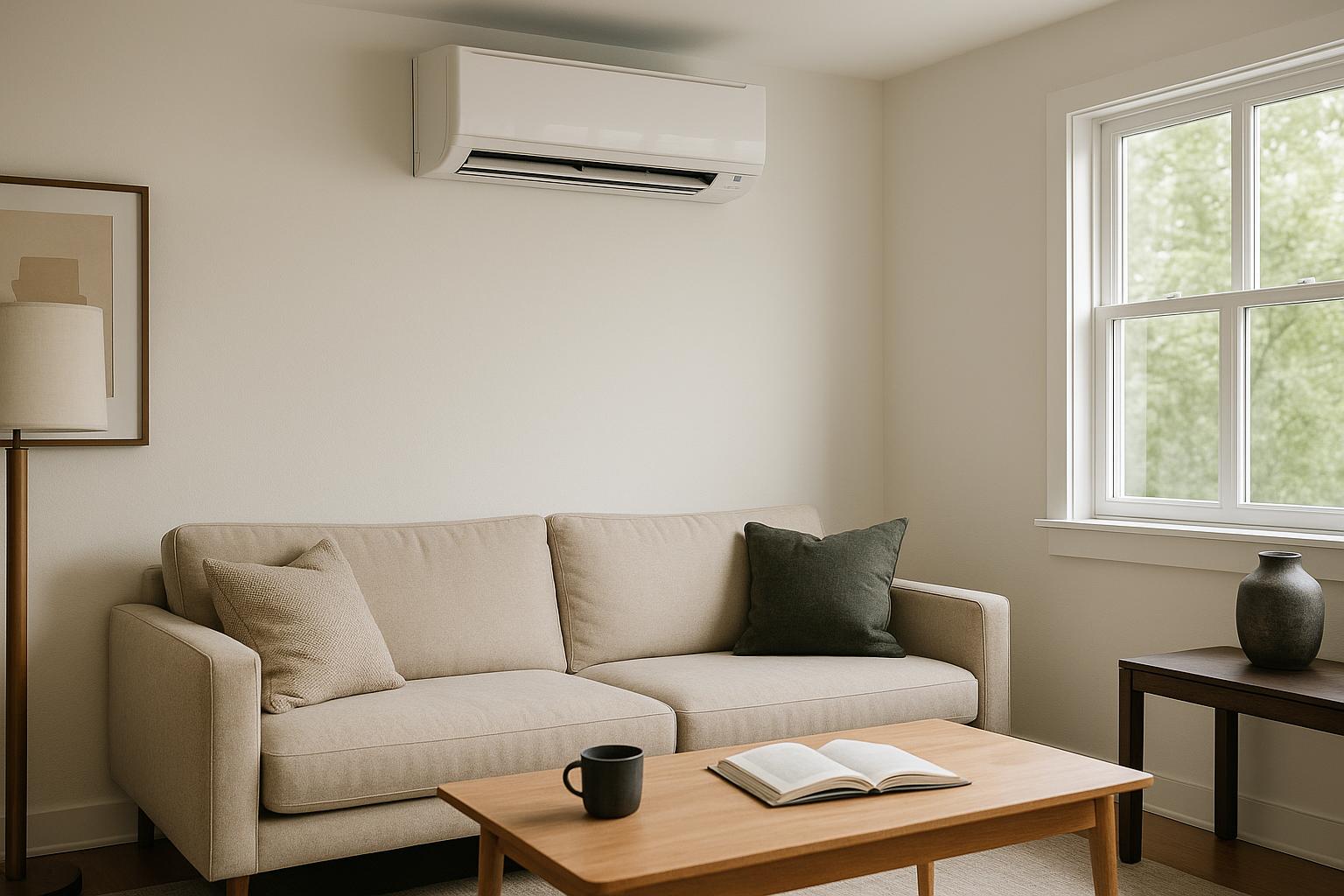
Central air conditioning uses a single outdoor condenser connected to an indoor air handler, which pushes cooled air through a network of ducts to vents throughout the home. One thermostat controls the whole system, and the ductwork is what actually delivers comfort to every room.
A ductless mini split skips the ducts entirely. An outdoor compressor connects directly to one or more indoor air handlers mounted on a wall or ceiling, through a small refrigerant line run through a hole in the exterior wall. Each indoor unit conditions the room it is installed in directly, with no distribution losses along the way. Most mini split systems use inverter driven compressors that modulate output continuously instead of cycling on and off, which keeps temperatures steadier and the equipment quieter.
Mini Split vs Central Air Conditioning Cost in Connecticut
Cost is usually the first question, and the honest answer depends heavily on whether ductwork already exists in your home.
For homes with existing, healthy ductwork, central air is typically the more affordable path:
- Standard central air system, existing ductwork: $4,000 to $7,000 installed
- High-efficiency central air system (16+ SEER2), existing ductwork: $6,000 to $10,000 installed
For homes without ductwork, the comparison changes:
- Central air with new ductwork added: $8,000 to $16,000 or more, depending on home size and duct routing complexity
- Ductless mini split, single zone (one room or addition): $2,500 to $5,000 installed
- Ductless mini split, multi-zone (whole-home coverage): $8,000 to $16,000 installed, with no walls or ceilings opened up
Notice that whole-home multi-zone mini split coverage can land in a similar overall price range to central air with new ductwork. The real difference is not always the sticker price, it is what you get for it. A mini split avoids cutting into finished ceilings and walls, delivers higher efficiency per zone, and gives each room independent temperature control. Central air with new ductwork gives you a fully ducted home that can support future additions like a whole-home humidifier or air purifier more easily. A free in-home estimate is the only way to know which number actually applies to your house.
Which Is Better for Older Connecticut Homes Without Ductwork?
This is where the decision becomes clearest. If your home has no existing ductwork, and especially if it was not built with the wall and ceiling cavities to easily add it, a ductless mini split is usually the more practical choice. Opening up finished ceilings and walls to route new ductwork is expensive, disruptive, and sometimes not fully possible without compromising the home’s structure or finishes.
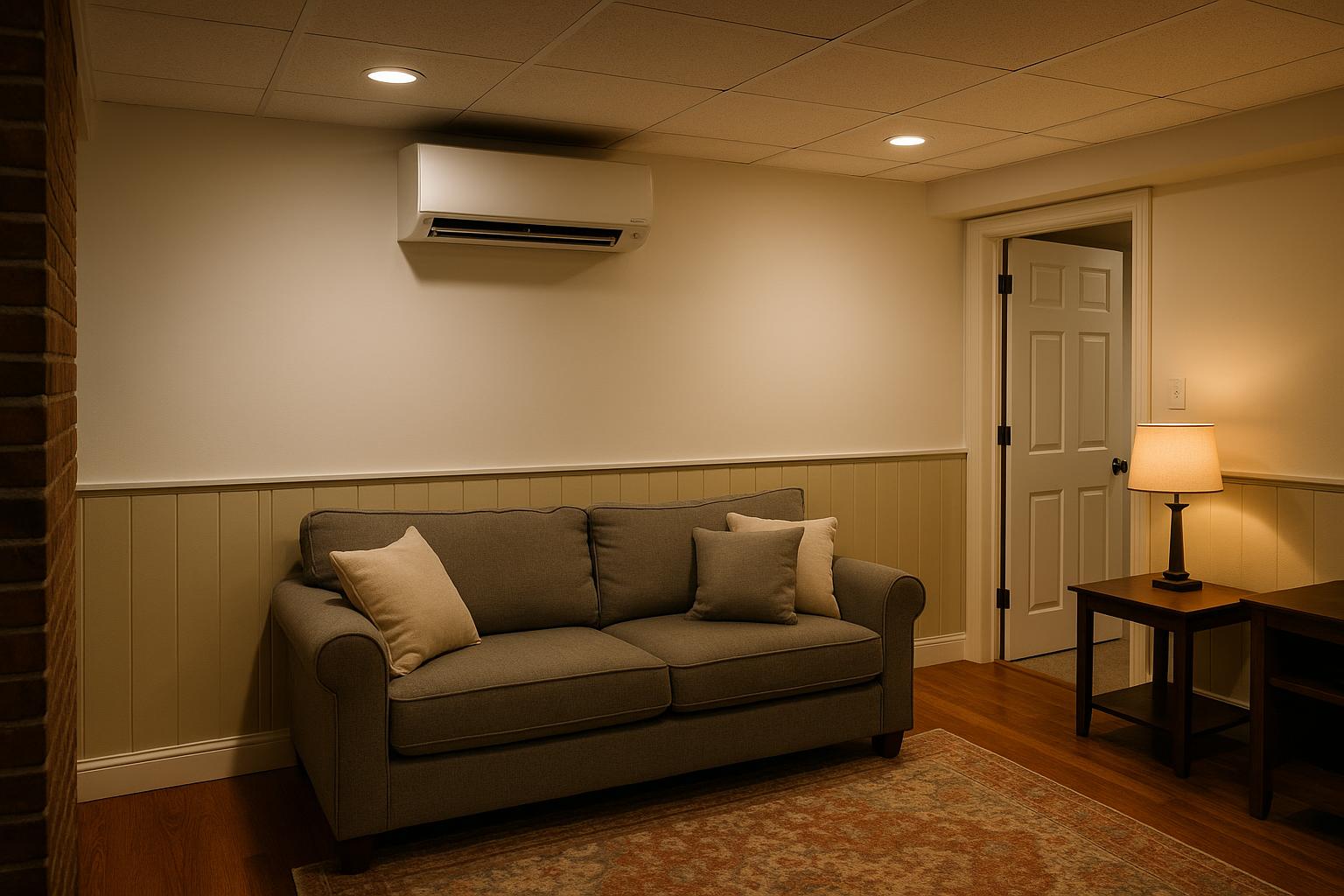
Mini splits solve this by requiring only a small hole through an exterior wall per indoor unit. That makes them the standard answer for finished basements, additions, converted attics, sunrooms, and any home built around a boiler-and-radiator heating system that has heat covered for winter but nothing for summer.
If your home already has ductwork from an existing furnace or older central air system, and that ductwork is in good shape, central air conditioning is usually the simpler and more cost-effective route, since you are not paying to build a distribution system from scratch.
Energy Efficiency: Which System Costs Less to Run
Mini splits generally win on efficiency, and the reason is mechanical, not marketing. Ducted systems lose a meaningful share of conditioned air to leaks and heat transfer as it travels through walls, attics, and crawl spaces before reaching a vent. A ductless system delivers conditioned air directly into the room, with no distribution losses at all.
Inverter driven mini split compressors also modulate their output to match the actual cooling load in real time, rather than cycling fully on and off like most central air systems. That steadier operation tends to translate into lower monthly electric bills, particularly in homes with several distinct zones that do not all need the same amount of cooling at the same time.
Zone Control and Comfort
Central air conditions the whole home through one thermostat. If the upstairs bedrooms run warmer than the main floor, a single central system has limited ability to fix that without a separate zoning damper system layered on top.
A multi-zone mini split gives every connected room its own thermostat and its own output. A home office, a primary bedroom, and a finished basement can all run at different temperatures at the same time, based on how each space is actually used. For households where comfort preferences differ by room, or where certain rooms (a sunroom, a converted garage) run hotter or colder than the rest of the house, that zone by zone control solves a problem central air cannot.
Certified Mitsubishi Electric Dealer: Why That Matters for Your Mini Split
Not every mini split installation performs the same, and the brand and the installer both matter. Express Home Services is a certified Mitsubishi Electric dealer, which means our technicians receive factory-level training on sizing, installing, and commissioning Mitsubishi’s ductless systems correctly, and our customers qualify for Mitsubishi’s extended warranty programs.
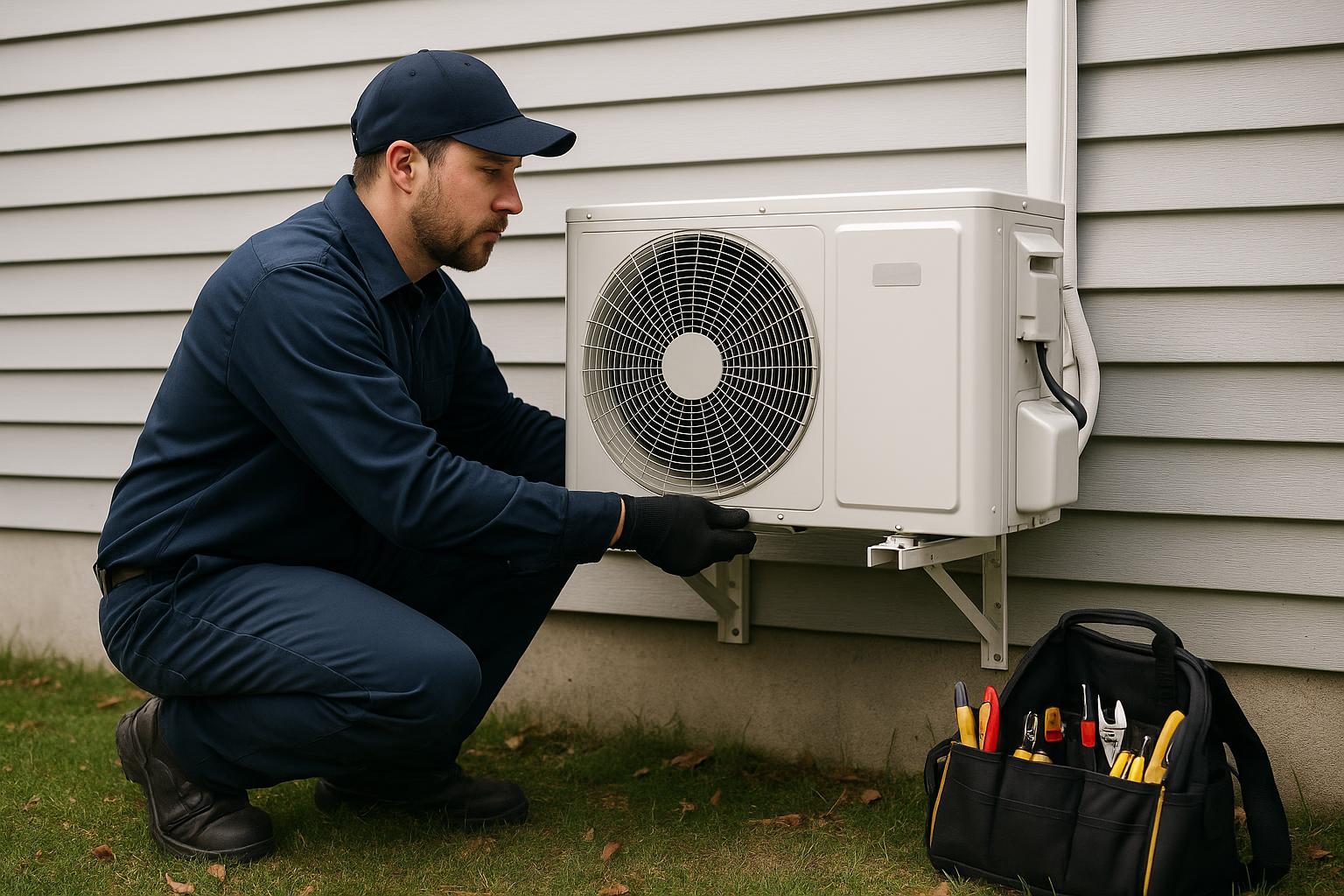
Mitsubishi’s Hyper-Heat line is worth knowing about specifically for Connecticut winters: these systems maintain full heating capacity down to 5 degrees Fahrenheit outside, at a time of year when many competing mini split brands lose significant output as temperatures drop. That matters if you are considering a mini split as a year-round comfort solution and not just a summer add-on.
A poorly sized or poorly installed mini split, undersized equipment, a poorly placed indoor unit, an inadequate refrigerant charge, performs badly and frustrates homeowners regardless of brand. Mitsubishi mini split installation in CT done correctly runs quietly and reliably for 15 to 20 years.
Which System Is Right for Your Connecticut Home?
A quick way to think through the decision:
- Choose central air if: you already have working ductwork, you want whole-home cooling through one thermostat, and you do not need independent room by room temperature control.
- Choose a ductless mini split if: your home has no ductwork (or the ductwork would be expensive to extend), you are cooling an addition or finished basement, you want zone by zone control, or you are looking for the highest efficiency option available.
- Get a real assessment either way. Home size, existing electrical capacity, attic and wall access, and how you actually use each room all affect which system makes sense, and by how much.
Get a Real Recommendation for Your Home
Every range and comparison point in this guide is a starting point, not a quote for your specific house. The only way to know whether a mini split or central air system makes more sense, and what it will actually cost, is a free in-home estimate where a technician walks your home, checks existing ductwork and electrical capacity, and asks how you actually use each room.
Express Home Services is a family-owned, 5.0-star rated HVAC company based in New Britain, CT, and a certified Mitsubishi Electric dealer serving homes across Connecticut. We will give you a straight answer on which system fits your home, not just the one we would rather sell.
Frequently Asked Questions About Mini Splits vs. Central Air in Connecticut
Ready to Compare Options for Your Home?
Express Home Services is a family-owned, 5.0-star rated HVAC company and certified Mitsubishi Electric dealer serving Connecticut, based in New Britain.
Call: (860) 606-4872, 24/7
Schedule online: Book an appointment online
Free in-home estimates on mini split installation, central air installation, and financing options.